Knowledge Base / Field Notes
AP-on-a-Stick 101: What a Site Survey Actually Involves
March 2026
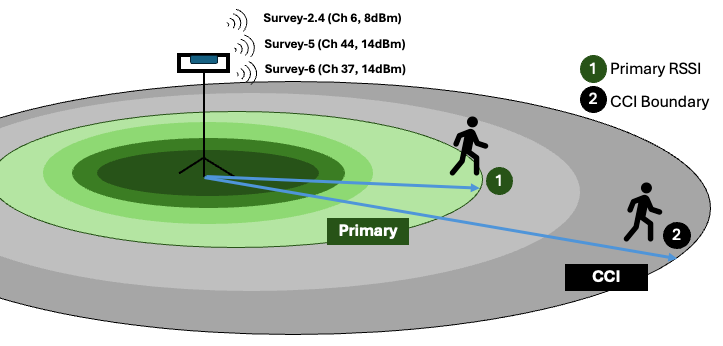
"AP-on-a-Stick" sounds informal for what is actually one of the more precise steps in a wireless design engagement. The name describes exactly what it is: a temporary access point mounted on an adjustable pole or tripod, positioned at the intended final mounting height and location, used to simulate real-world coverage from that exact spot before anything is permanently installed. It's the step that turns a predictive model into a field-verified design, and it's worth understanding what actually happens during one of these surveys.
Before the Walkthrough Starts
A survey engagement doesn't begin with the equipment going up. It starts with a kickoff to confirm the scope of the space, review any existing floor plans or predictive design output, and identify areas that need particular attention — a mezzanine, a cold storage room, an imaging suite, anywhere coverage is likely to be contested. From there, the survey hardware gets calibrated. For Ekahau-based surveys, that means calibrating the Sidekick 2 sensor against the specific access point hardware and antenna pattern being used, so the data collected actually reflects real-world radio behavior rather than a generic assumption.
Setting Up the AP-on-a-Stick
The temporary access point — whether a vendor demo unit or, for BWDS's own field kit, the HiveRadar APoS rig built on the Acceltex WSSK platform — goes up at each planned mounting location, at the actual height and orientation the final AP would use. This matters more than it sounds: coverage from an AP at nine feet behaves differently than the same AP at twelve feet, and orientation affects antenna pattern and downtilt. Simulating the real mounting condition is what makes the survey data trustworthy instead of approximate.
Walking the Active and Passive Survey
With the AP-on-a-Stick powered up, the surveyor walks the space carrying the calibrated Sidekick and a connected client device, recording data continuously as they move through every area the network needs to cover — not just the open floor, but corners, storage rooms, stairwells, and anywhere staff or equipment will actually need connectivity. An active survey associates to the network and measures real throughput, signal-to-noise ratio, and roaming behavior as the walk continues from one AP's coverage into the next. A passive survey listens to the RF environment without associating, capturing coverage, channel utilization, and interference from every visible access point and non-Wi-Fi RF source in range — giving a clean picture of the noise floor a design has to work around.
This gets repeated at each candidate AP location identified in the predictive design, building up a real dataset across the entire facility rather than a single spot check.
Turning the Walk Into a Deliverable
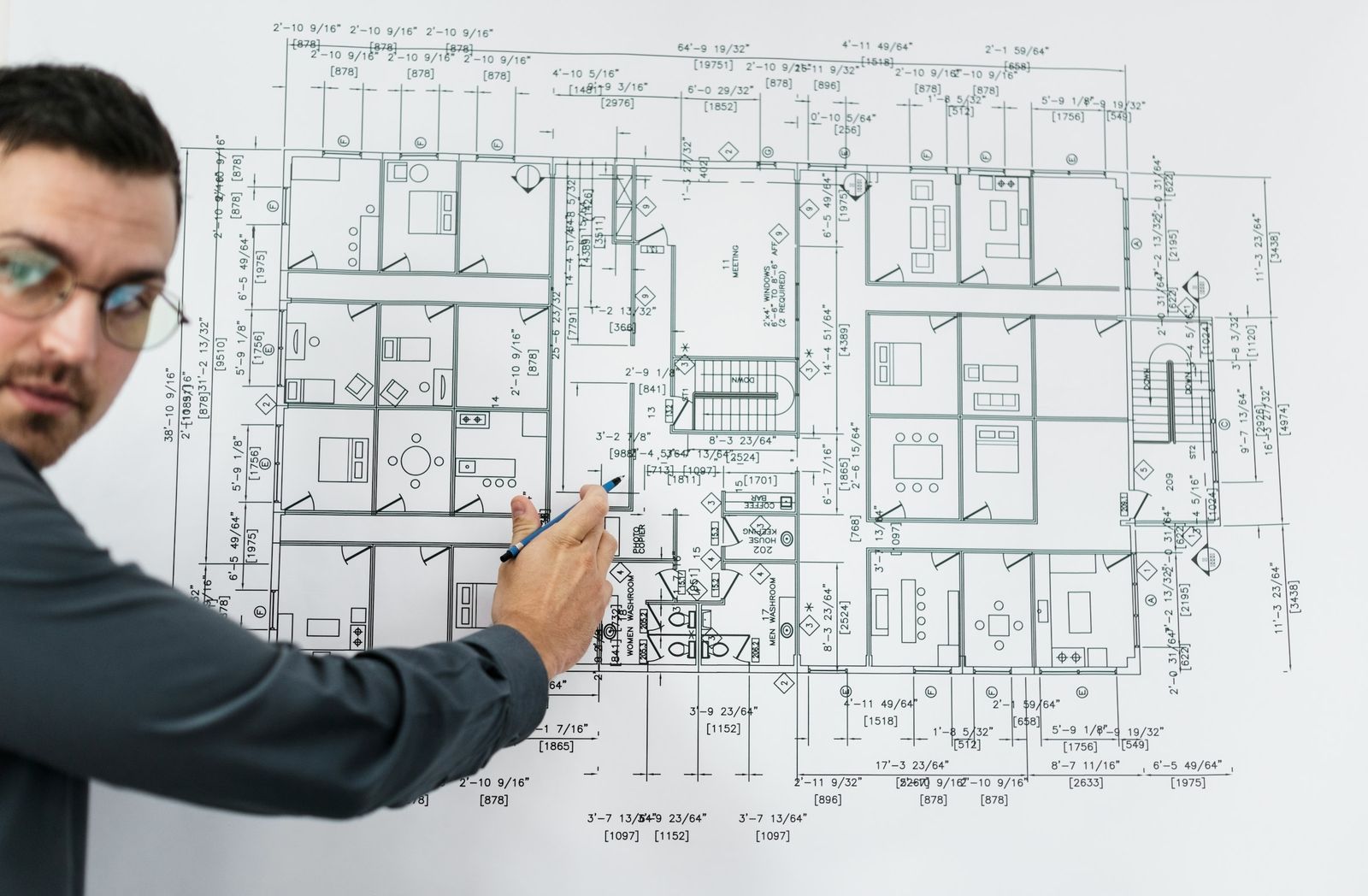
All of that walked data comes back into the survey software as a set of heatmaps overlaid on the facility's floor plan — signal strength, SNR, channel overlap, and interference, all georeferenced to actual physical locations in the building. That's cross-referenced against the original predictive design to confirm where the model held up and where reality diverged enough to warrant an adjustment — an added access point, a relocated one, or a channel plan change.
The final deliverable a facilities team receives isn't just a heatmap. It's a validated, as-built floor plan with documented AP locations, channel assignments, and coverage data that becomes the reference point for every future troubleshooting call, expansion, or renovation in that space — proof the design works, not just a projection that it should.
Why This Step Doesn't Get Skipped
It would be faster to skip straight from predictive design to permanent installation. The AP-on-a-Stick survey exists because "faster" and "correct" aren't the same thing in RF design, and the cost of finding a coverage gap during a walked survey — a pole moved a few feet, a channel reassigned — is a rounding error compared to the cost of finding that same gap after cabling, mounting, and commissioning are already done.
Ready to talk through your space?
Tell us about your facility and we'll scope the right survey and design approach — no obligation.
Start a Project Inquiry